
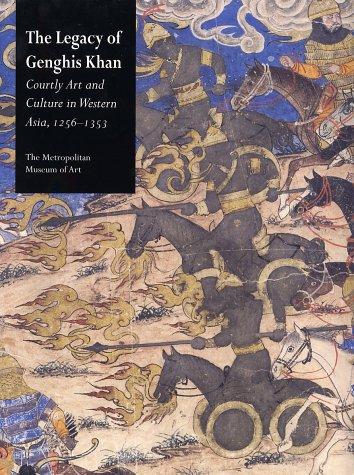
Under the leadership of Genghis Khan, nomadic horsemen burst out of Mongolia in the thirteenth century and began their sweep across Asia, creating the largest empire the world has ever known. Particularly in Iran and China, the results were far-reaching: the Mongols imposed enormous changes but at the same time were profoundly influenced by the highly developed civilization of their new subjects.
While the Ilkhanids retained the nomadic practice of moving from place to place and holding court in elaborate tents, they also commissioned permanent pleasure palaces lined with richly decorated ceramic tiles. Jewelry and finely worked metal objects were produced in abundance, as were textiles woven with gold. Mosques and mausoleums, built on a grand scale, were lavishly furnished. More than two hundred outstanding objects exemplifying all these branches of the arts are illustrated in color and fully described in this catalogue.
Eight distinguished scholars in the field present the historical and political background of the Ilkhanid era and address such subjects as manuscript illustration, religious art, and the transmission of design motifs across Asia. Also included are two technical studies, maps, a genealogical chart, and a complete bibliography.